

How to Calculate Dessert Servings Per Person
Updated: 4 days ago
Last Updated: November 2, 2026
Quick Summary
To calculate dessert servings, multiply your guest count by a serving multiplier for your style, add a 10% buffer, then divide the total across your dessert types. A dessert table uses 2 to 3 pieces per guest, while a single plated dessert uses 1.0 per guest.
Plan cake-only weddings at 0.7 to 0.75 slices per guest.
Mini and bite-sized dessert bars need 3 to 4 pieces per person.
A 60-guest party with a mixed spread needs about 150 dessert pieces.
Dinner parties call for one plated dessert per guest plus 10% extra.
Add 0.5 pieces per guest for each hour past the two-hour mark.
Table of Contents
The Dessert Servings Formula That Works for Any Event
Figuring out dessert servings per person comes down to one formula: multiply your guest count by a serving multiplier, add a 10% buffer, then divide the total across the dessert types you plan to serve. Below, we show the exact math, with worked examples for weddings, dinner parties, and events of 60 guests.
Dessert servings planning is arithmetic with a few judgment calls layered on top.
Step 1: Start With Your Guest Count
Begin with a firm headcount, not your invite list. A common mistake is planning portions for everyone invited when typical attendance runs lower.
Use your RSVP count plus a small allowance for plus-ones and no-shows. If you are weeks out, estimate attendance at roughly 80% of invitations sent, then revise once RSVPs arrive.
Confirmed guests: your baseline number
Verbal yeses: count at 90%
No response: count at 50%
Step 2: Pick Your Serving Style Multiplier
Your serving style decides how many dessert pieces each guest will take. This is the single biggest lever in the whole calculation.
Serving Style | Multiplier Per Guest | Best For |
Single plated dessert | 1.0 | Formal seated dinners |
Cake only | 0.7 to 0.75 slices | Weddings, birthdays |
Cake plus one other dessert | 1.25 total pieces | Receptions with variety |
Dessert table, mixed treats | 2 to 3 pieces | Parties, receptions |
Mini and bite-sized only | 3 to 4 pieces | Cocktail hours, buffets |
Cookie trays only | 2 to 3 cookies | Casual gatherings, offices |
The logic is simple. When guests choose from a spread, they sample. The USDA dietary guidance on added sugars is a useful sanity check here: most guests will not eat four full slices of cake, but they will happily take three mini cookies.
Step 3: Add a 10% Buffer and Divide by Dessert Type
Multiply your guest count by your chosen multiplier, then add 10% for extra portions to cover big appetites, dropped plates, and second rounds.
Here is the math in action for 100 guests at a dessert table:
Guest count: 100
Multiplier: 2.5 pieces per person
Base total: 250 dessert pieces
Add 10% buffer: 275 pieces
Split across three dessert types: about 92 pieces each
That last step matters. Dividing across multiple dessert types keeps your table balanced and stops one item from running out early. If you serve cookies, cupcakes, and mini brownies, each gets roughly a third of the total.
How Many Desserts Per Person for a Wedding
For a wedding, plan on 0.7 to 0.75 cake slices per guest if you serve cake alone, or 1.25 total dessert pieces per person if you add a second option.
Wedding dessert quantities hinge on whether cake is plated or buffet-style, whether you add a dessert table, and when dessert lands in the schedule.
Cake-only reception: 0.75 slices per guest
Cake plus cookies or mini pastries: 1.25 pieces per guest
Full dessert table with no cake: 2.5 to 3 pieces per guest
A common mistake is ordering cake for every single guest when half the room skips it. If you are weighing favor-bag options for the same wedding, our guide to the best cookies for wedding favor bags covers which styles hold up best.
A Worked Wedding Allocation Across Multiple Dessert Types
The rules above give you the total. The harder question is how to split it so one item does not run out while another sits untouched.
Set your guest count and apply the multiplier for your serving style.
Add the 10% buffer.
Assign a share to each dessert type based on how prominently it appears on your table.
Round each share to a whole piece or whole batch.
A common pattern is to give cake the largest single share, then split the remainder across two or three supporting items. For a 150-guest wedding with cake plus a cookie display and mini pastries, the math looks like this:
Dessert Type | Share of Total | Pieces | Notes |
Cake slices | 50% | 95 | About 0.63 slices per guest |
Cookies | 30% | 57 | Roughly 2 cookies per dozen guests |
Mini pastries | 20% | 38 | About 1 per four guests |
Total | 100% | 190 | Includes 10% buffer |
The 50/30/20 split is a starting point, not a rule. If cake is the plated centerpiece, push it to 60% and trim the supporting items; with no plated cake, let cookies and minis carry 70% of the total.
Adjusting Wedding Quantities for Timing and Duration
When dessert lands in the schedule changes the number as much as the serving style does. Use these adjustments on top of your base total:
Dessert immediately after a plated dinner: reduce total pieces by about 15%. Guests are full and take smaller portions.
Dessert after a buffet dinner: keep the base total. Buffet portions tend to be lighter than plated ones.
Dessert-only or cocktail-style reception: increase to 3 to 4 pieces per guest. There is no meal competing for appetite.
For a 150-guest wedding with a 4-hour reception and a late-night cookie station: 190 base pieces, plus 0.5 pieces per guest for the extra hour (75 pieces), minus 25% for the competing station (about 66 pieces), landing near 199 pieces. Adjustments can offset each other, so run the math to avoid over- or under-ordering.
Inclusive Wedding Dessert Planning
A wedding dessert table should have something every guest can eat. Ask about dietary needs on the RSVP and reserve portions separately.
Gluten-free: reserve about 10% of total pieces if you expect even a few gluten-free guests. A flourless chocolate cake or gluten-free cookie option covers this without a separate table.
Vegan and dairy-free: reserve about 10% of total pieces. Vegan cookies and fruit-based desserts travel well and hold up on a buffet.
Nut-free: keep at least one nut-free option clearly labeled, and separate serving utensils to avoid cross-contact.
Label each dietary option with a small sign. Guests with restrictions will find it, and guests without will often try it too, so count inclusive options in the total. If you are sourcing inclusive options, our list of vegan and gluten-free dessert delivery options shows what is actually orderable.
Pro Tip Run the allocation math once with your base total, then again with your timing adjustments. If the two numbers are within 10% of each other, order the higher one. The buffer is cheaper than a late-night run to the store.
Dessert Bar Quantities Per Person: Mini and Bite-Sized Treats
For a dessert bar built on mini and bite-sized treats, plan three to four dessert pieces per person. Small portions invite sampling, so guests take more pieces than they would full servings. A 100-guest party needs roughly 300 to 400 mini desserts before the buffer.

Mini desserts, canapé-style sweets, and cookie trays all follow this higher multiplier. The smaller the portion, the more pieces each guest takes.
Mini cookies: 3 to 4 per guest
Bite-sized brownies or bars: 3 per guest
Mini cupcakes: 2 to 3 per guest
Watch out: a dessert bar with no serving guidance invites overloading. Post small signs suggesting "two or three pieces per plate" and guests will pace themselves.
For corporate events and large office gatherings, bulk cookie orders are the easiest way to hit these numbers without a catering team. Our roundup of bulk cookie orders for corporate events walks through vetted options that scale to a crowd.
How Much Dessert for a Party of 60
A party of 60 needs about 150 dessert pieces for a mixed dessert table, or 45 to 50 cake slices if you serve cake only. Here is the full breakdown for a 60-guest party with a mixed spread:
Dessert Type | Pieces Per Guest | Total With 10% Buffer |
Cookies | 1.0 | 66 |
Mini pastries | 0.75 | 50 |
Cake slices | 0.5 | 33 |
Total | 2.25 | 149 |
That comes to about 2.25 pieces per person, comfortably in the safe range for a buffet party. If dessert follows a full meal within an hour, drop toward 1.5 pieces per person.
How Many Desserts to Serve at a Dinner Party
At a dinner party, serve one plated dessert per guest, plus a small extra portion of 10%. Sit-down dinners call for restraint: guests have already eaten a full meal, and a single well-made dessert lands better than a crowded table.
The formula here is the simplest version of the calculation:
Count seated guests
Multiply by 1.0 for a single plated dessert
Add 10% for extra portions
Add one spare serving for the host
For 12 dinner guests, that means 13 to 14 servings. Hosts who want to go deeper on format and timing can read our tips for hosting dessert dinner parties.
When the Single-Plated Rule Does Not Fit
The one-per-guest rule assumes a full meal, a seated table, and a plated dessert. Change any of those and the number moves:
Buffet dinner instead of plated: increase to 1.25 to 1.5 pieces per guest. Guests serve themselves smaller portions but come back for more variety.
Dessert-only gathering (no meal): increase to 2.5 to 3 pieces per guest. There is no dinner competing for appetite.
Heavy, rich dessert (chocolate torte, cheesecake): keep to 1.0 pieces per guest. Rich desserts satisfy faster and guests rarely take seconds.
A dinner party with a buffet setup and a light cookie-and-fruit dessert for 12 guests lands at about 18 to 20 pieces, not 13. Run the adjustment before you order to avoid under-serving a grazing crowd.
A Worked Example for a 12-Guest Dinner Party
Here is the full calculation for a seated dinner party with a plated dessert plus a small cookie plate, which is a common format for hosts who want a backup option:
Dessert Type | Pieces Per Guest | Total With 10% Buffer |
Plated dessert | 1.0 | 13 |
Cookies (backup) | 0.5 | 7 |
Total | 1.5 | 20 |
The plated dessert carries the meal; the cookies cover the guest who wants a little more and the host who wants a spare. If you drop the plated dessert and serve cookies only, use 2 to 3 cookies per guest, which for 12 guests is 26 to 40 cookies before the buffer.
Dietary Needs at a Dinner Party
A dinner party is where dietary restrictions matter most, because the guest list is small enough that one missed plate is obvious. Ask about restrictions when you send the invitation.
Reserve a separate portion for each restricted guest. If two guests are gluten-free, make or buy two gluten-free servings plus one spare.
Keep one option that covers multiple restrictions. A flourless chocolate cake or a fruit-based dessert often works for gluten-free and dairy-free guests at once.
Label everything. Small cards next to each dessert tell guests what they can eat without a conversation.
For a 12-guest party with one gluten-free guest and one vegan guest, the total stays at 20 pieces, but two of those pieces should be the restricted options, counted separately so they are not eaten by guests with no restrictions.
Watch Out Do not assume a guest will "just eat around" a dessert. If you know about a restriction, plan a portion for it. A dinner party is small enough that an empty plate is noticed.
Adjusting Quantities for Meal Timing, Duration, and Dietary Needs
Meal timing. Dessert right after a heavy dinner means fewer pieces per guest.
Event duration. Every extra hour adds grazing.
Other food. A candy station, s'mores bar, or ice cream cart competes with your dessert table.
Dietary needs. Offer at least one vegan and one gluten-free option, and count those separately.
Heavy plated dinner: 1.0 pieces per guest
Buffet dinner: 1.5 to 2 pieces per guest
Dessert-only event: 3 to 4 pieces per guest
Watch out: ordering zero gluten-free or vegan desserts because "nobody asked" leaves those guests watching everyone else eat.
Ordering Cookies and Desserts for Your Next Event
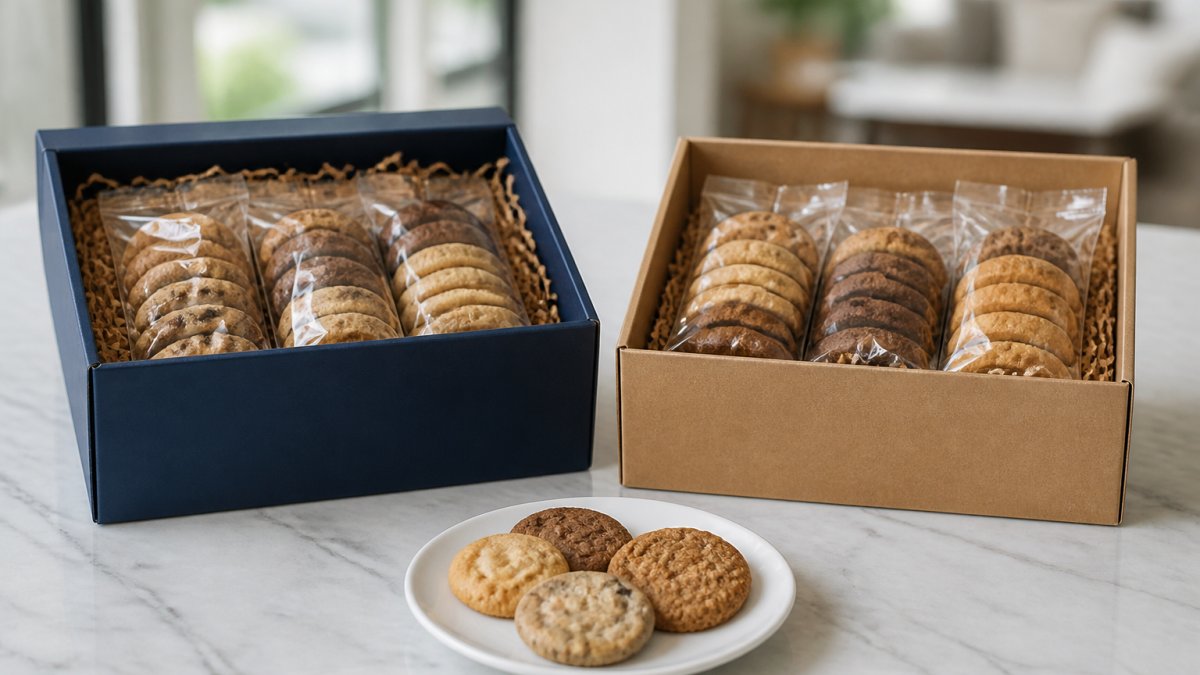
Once the math is done, ordering gets easy. Cookies are a practical dessert to order in bulk: guests can take exactly what they want.
Here is the checklist we recommend before you place any dessert order:
Final guest count confirmed, with buffer added
Serving style chosen and multiplier applied
Total pieces divided across dessert types
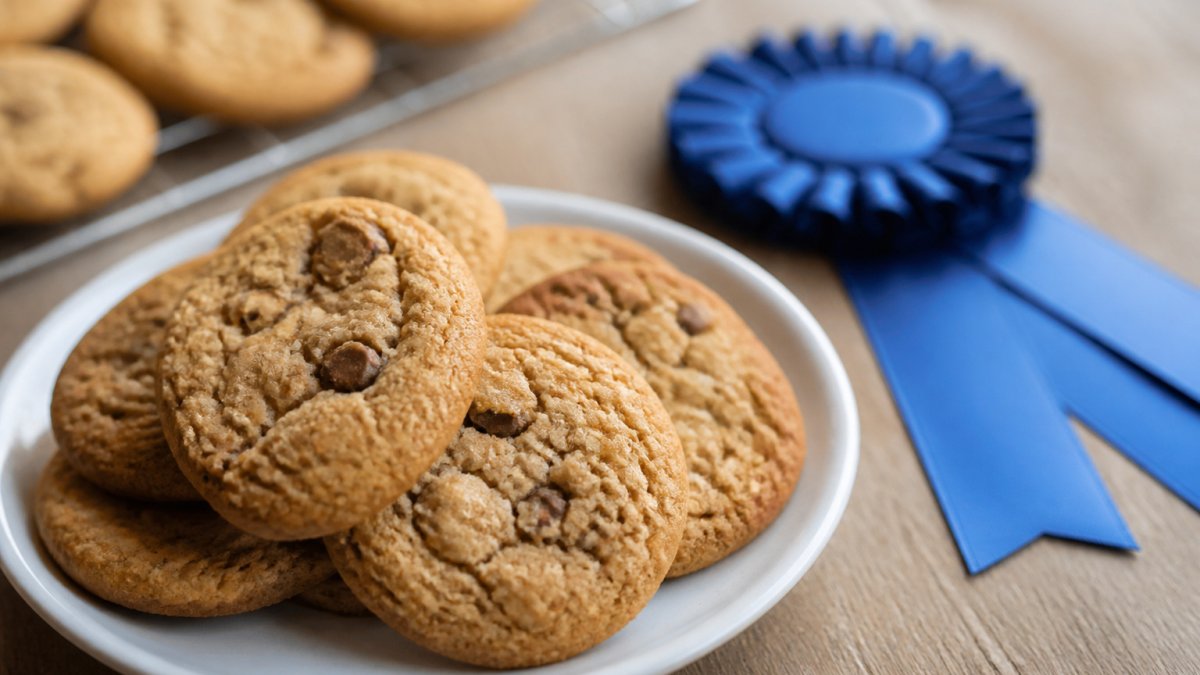
At Julie's Blue Ribbon Cookies, we ship homemade cookies made with real butter and all-natural ingredients straight to your door, with free shipping on all U.S. orders over $75.
If you are still choosing a caterer or dessert vendor, our guide on what to look for in dessert catering covers the questions worth asking before you commit.
Frequently Asked Questions
How many dessert servings should I plan per guest?
Plan one dessert per guest for plated or single-serving desserts like cake slices or cupcakes. For dessert bars with mini and bite-sized treats, plan three to four pieces per person. If you serve multiple dessert types, divide your total estimate across them. Always add a 10% buffer so you do not run out, especially for events with a full meal where guests may eat lighter.
Should I plan less dessert if the event includes a full meal?
Yes, slightly. A heavy meal can reduce appetite, so you can plan closer to the lower end of your range, around one dessert per guest for single servings or two to three mini portions for a dessert bar. If the event runs long or includes dancing, guests often return for a second treat, so keep that 10% buffer in place. Timing matters as much as the menu.
How do I estimate dessert portions when serving several options?
Calculate your total dessert pieces first, then divide by the number of dessert types. For a party of 60 with three mini desserts per person, that is 180 pieces total, or 60 of each type. Offering variety encourages guests to try more than one, so a mixed dessert table with cookies, cupcakes, and bite-sized bars gives you flexibility and covers different tastes and dietary needs.
How many different desserts should I offer for a party?
Offer two to four dessert types for most parties. A mix of cookies, a cake or cupcakes, and one bite-sized option covers variety without overwhelming your setup or budget. For larger events, three to five options work well. Include at least one gluten-free or vegan choice so guests with dietary restrictions have a real option, not just a garnish.
The hardest part of dessert planning is not the math. It is trusting your numbers when the table looks full and guests keep coming back. Lock in your guest count, pick your multiplier, add the buffer, and order from a baker whose cookies hold up in transit and on the table. Get started with Julie's Blue Ribbon Cookies and serve a dessert spread that runs out right on time, not an hour early.
Comments