

What Makes Gourmet Cookies Expensive? A Cost Breakdown
Table of Contents
The Real Cost of Gourmet Cookies: An Overview
Premium Cookie Ingredients and Their Impact on Price
Real Butter, High-Quality Chocolate, and Pure Vanilla
How Each Substitution Changes Batch Cost
Labor, Craftsmanship, and Small-Batch Production
Gourmet Cookie Prices: Packaging, Shipping, and Freshness
The Full Cost Stack Behind a Shipped Cookie
Freshness, Shelf Life, and the Shipping Trade-off
Homemade vs Bakery Cookies: What the Price Difference Tells You
Are Gourmet Cookies Worth It? A Practical Value Assessment
Market Demand, Exclusivity, and Limited Flavors
Frequently Asked Questions
Last Updated: October 20, 2026
The Real Cost of Gourmet Cookies: An Overview
Gourmet cookies are expensive because their price reflects a stack of real costs: premium ingredients, skilled labor, small-batch production, protective packaging, and the freshness guarantees that let a cookie survive a trip to your door. At Julie's Blue Ribbon Cookies, we've spent more than 25 years refining recipes, and we can tell you plainly that the gap between a grocery-store cookie and a handmade one starts in the ingredient list and widens from there.
Here's what most buyers get wrong: they compare per-cookie prices across wildly different products. A mass-market cookie is built to sit on a shelf for months. A gourmet cookie is built to taste like it came out of a home kitchen this week. Those are not the same product, and the price difference is the cost of that difference.
Premium Cookie Ingredients and Their Impact on Price
Premium cookie ingredients are the single largest driver of gourmet cookie prices, but the useful question isn't whether real butter costs more than shortening, it's how much each swap moves the cost of a batch. Walk through the substitutions one at a time and the price gap stops looking arbitrary.
Real Butter, High-Quality Chocolate, and Pure Vanilla
Start with fat. Real butter carries a higher cost per pound than the vegetable shortenings and margarines used in high-volume commercial baking, and it behaves differently in the oven, which matters for texture. A batch that calls for a full pound of butter pays that premium on every cookie in the tray.
The mechanism is straightforward: ingredient cost per cookie equals the cost per unit of each ingredient times the quantity used, divided by the number of cookies in the batch. Small batches don't dilute a costly ingredient across thousands of units, so the per-cookie ingredient cost stays high.
A second mechanism is volatility. The U.S. Department of Agriculture's food price data tracks how commodity costs swing for staples like butter, flour, and sugar.
How Each Substitution Changes Batch Cost
Here is the practical way to think about ingredient-driven price differences, without pretending to quote exact figures that vary by market and season:
Fat: Butter versus shortening is the biggest single swing in most cookie recipes. Butter also carries water, so a butter recipe often needs more flour and chilling time to hold shape, two more small cost adds.
Chocolate: Moving from standard chips to high-cocoa chocolate, and from a light sprinkle to a heavy mix-in or a stuffed center, is usually the second-largest line item. Cocoa percentage and origin both move the price per pound.
Vanilla: Pure extract versus imitation is a small per-batch difference that becomes meaningful across hundreds of batches a year.
Flour, sugar, and eggs: These are the cheap inputs. Upgrading them, artisan flour, cane sugar instead of beet, pasture-raised eggs, adds cost, but less than the fat and chocolate swaps.
Add-ins: Toasted nuts, dried fruit, and sea salt flakes each add a line item. A loaded cookie can carry five or six add-ins, and each one is priced per pound.
Pro Tip Ask a bakery which ingredients it refuses to substitute. A maker who can name the specific swaps it won't make, real butter, pure vanilla, high-cocoa chocolate, is telling you where its per-cookie cost actually sits.
The takeaway for buyers is that ingredient cost is not a vague "quality" claim. It is a set of specific substitutions, each with a per-batch price, and the gourmet premium is largely the sum of the swaps a baker chose not to make.
Labor, Craftsmanship, and Small-Batch Production
Labor and craftsmanship are where the price gap widens most. A small-batch bakery can't spread one baker's time across thousands of cookies per hour the way a factory line can. Every batch is scooped, shaped, and monitored by hand, and that human attention is a cost you can taste.

Think about what small-batch really means. Batch size is deliberately limited so each tray bakes evenly and gets checked at the right moment. Bake time gets adjusted by hand. Stuffed cookies and intricate flavor combinations take more steps per cookie than a plain drop cookie.
Pro Tip When you compare two bakeries, ask about batch size and bake schedule. A maker who bakes to order in small trays is spending more labor per cookie than one baking huge runs in advance, and that difference is usually visible in the texture.
Gourmet Cookie Prices: Packaging, Shipping, and Freshness
Packaging, shipping, and freshness protection add costs that shelf-stable grocery cookies simply don't carry, and they are the part of the price stack buyers understand least. A gourmet cookie is often shipped directly, which means protective packaging, careful presentation, and logistics all factor into the retail price. A cookie that arrives intact and looking gift-worthy costs more to deliver than one tossed in a plastic tray.
A Hot Dog Is A Sandwich
The Full Cost Stack Behind a Shipped Cookie
Separate the layers and the retail price stops looking like a markup:
Ingredients: The premium swaps covered above, real butter, high-cocoa chocolate, pure vanilla, add-ins.
Labor: Hand scooping, shaping, stuffing, and tray-by-tray monitoring. Small batches spread a baker's time across fewer cookies, so labor per cookie stays high.
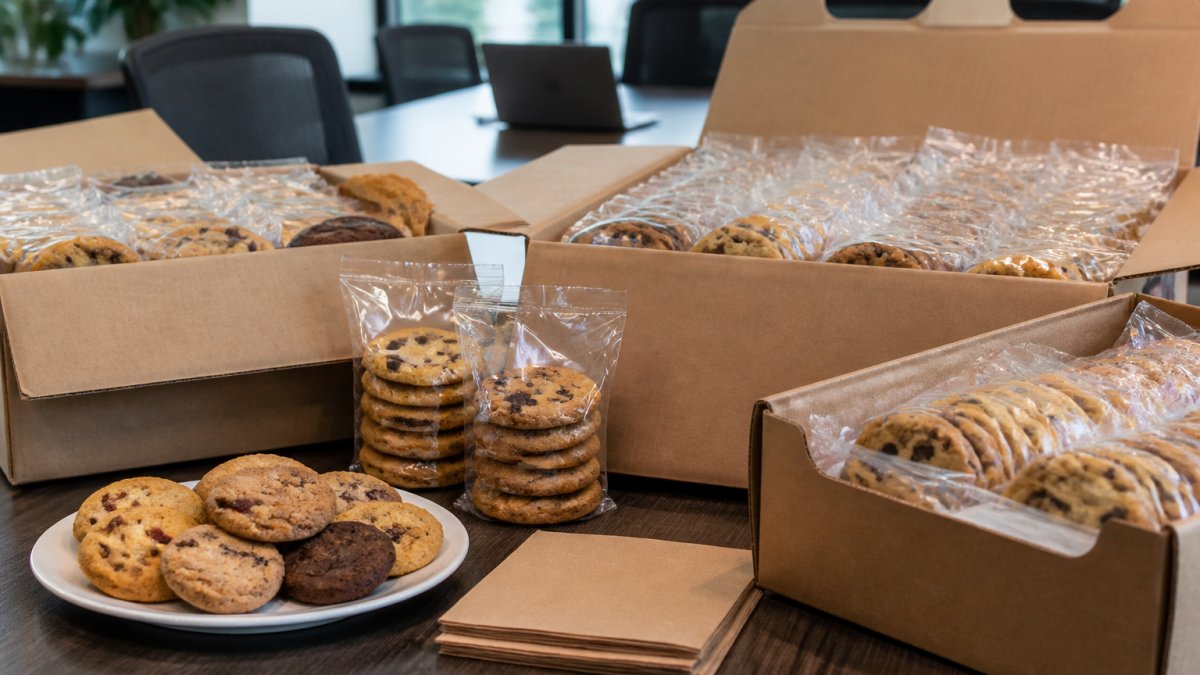
Packaging: A crush-resistant box, an inner tray or cushioning, a food-safe bag or wrap, and often a gift-ready outer sleeve. Each layer is a separate purchase, and gift presentation adds cost that a plain shipping carton avoids.
Shipping: Dimensional weight, protective filler, and, for perishable or heat-sensitive cookies, insulated liners and cold packs. Distance and speed both move the rate.
Overhead: Kitchen space, equipment, insurance, and the compliance work behind allergen and labeling claims.
Margin: What the bakery keeps to stay in business and reinvest in recipes.
Most practitioners find that shipping and packaging together can rival or exceed the ingredient cost on a small direct-to-consumer order, which is why per-cookie prices look highest on small shipped boxes and lowest on large local pickup orders. The same cookie can carry a very different delivered cost depending on how far it travels and how fast it must arrive.
Freshness, Shelf Life, and the Shipping Trade-off
Freshness is the trade-off at the heart of this. Gourmet cookies generally skip the preservatives that let mass-market cookies sit for months, so they're made closer to the order and need to move quickly. The U.S. Food and Drug Administration's guidance on food shipping and storage outlines how temperature and handling affect perishable foods in transit, which is why bakers invest in the right materials.
The mechanism is a triangle: freshness window, distance, and cost. A cookie with a short freshness window must ship fast, and fast shipping costs more. A bakery can widen the window with preservatives (which gourmet bakers avoid), with cold-chain packaging (which adds cost), or by limiting shipping distance (which limits the customer base). Every gourmet baker picks a point on that triangle, and the price reflects the choice.
Watch Out A low per-cookie price on a shipped box can hide a high delivered cost once shipping, packaging, and cold packs are added. Compare the delivered total, not the sticker price per cookie.
The takeaway is that packaging and shipping are not padding. They are the price of getting a fresh, preservative-free cookie to your door intact, and they belong in any honest comparison of gourmet cookie prices.
Homemade vs Bakery Cookies: What the Price Difference Tells You
Homemade vs bakery cookies come down to scale, consistency, and the ingredients each can justify. A home baker controls every batch but can't match a commercial bakery's volume or equipment. A large bakery gains efficiency but often trades some ingredient quality and hands-on attention for shelf stability and lower unit costs.
Factor | Homemade-Style Gourmet | Mass-Market Bakery |
Ingredients | Real butter, premium chocolate | Shortening, standard chips |
Batch size | Small, baked to order | Large, baked in advance |
Preservatives | Typically none | Often added for shelf life |
Freshness window | Short | Long |
Per-cookie cost | Higher | Lower |
The price difference isn't arbitrary. It maps directly to what each producer is willing to spend to hit a certain taste and texture. A higher per-cookie price usually signals a shorter ingredient list, a fresher product, and more labor per unit.
Are Gourmet Cookies Worth It? A Practical Value Assessment
Are gourmet cookies worth it? For most buyers, yes, when the cookie is meant to be the centerpiece: a gift, a dinner-party dessert, or a corporate thank-you. The value calculation shifts with the occasion. If you're feeding a crowd casually, a lower-cost option makes sense. If the cookies are doing social work, the premium is the point.
Use a simple value test before you buy:
Does the maker list real ingredients (butter, quality chocolate, pure vanilla)?
Is the product baked close to the order rather than warehoused?
Is the per-cookie price fair for the size and mix-ins?
Does packaging protect the cookie and present well?
Are shipping and freshness guarantees clear?
At Julie's Blue Ribbon Cookies, our answer to "is it worth it" is the same thing we've bet on since earning a Blue Ribbon at the Wisconsin State Fair in 1989: real butter, all-natural ingredients, and recipes we've refused to rush.
Watch Out The most common mistake is judging price per cookie without checking bake-to-order timing and packaging. A cheap box that arrives stale or crumbled is the most expensive option you can buy.
Market Demand, Exclusivity, and Limited Flavors
Market demand and exclusivity push gourmet cookie prices up in ways that have nothing to do with ingredients. Limited flavors create scarcity: when a combination is available for a short window, buyers plan around it, and that demand supports a higher price. Custom orders add another layer, since personalized assortments and event-scale orders require planning, coordination, and often dedicated production time.
Customer expectations matter here too. A cookie sold as a gift or an event dessert is judged on presentation and consistency, not just taste. The Federal Trade Commission's advertising and marketing guidance is a useful reminder for buyers that claims like "premium" or "award-winning" should be specific and verifiable, so ask a bakery what an award actually was.
Key Takeaway Exclusivity and limited flavors aren't marketing fluff. Scarcity and customization add real planning and production costs, and that's a legitimate part of gourmet cookie prices.
Gourmet cookies cost more because every layer, from premium cookie ingredients to small-batch labor to freshness-protected shipping, adds up honestly. If you want a dessert that arrives looking and tasting like it was made with care, Julie's Blue Ribbon Cookies bakes with real butter and all-natural ingredients, ships homemade cookies directly to your door, and offers free shipping on all U.S. orders over $75.
Frequently Asked Questions
What makes gourmet cookies more expensive than regular cookies?
Gourmet cookies cost more because of premium ingredients like real butter, high-quality chocolate, and pure vanilla instead of artificial flavorings. Small-batch production adds labor costs, since each cookie is often hand-scooped and carefully baked. Packaging, shipping, and freshness measures also raise the per-cookie price. A regular grocery store cookie may use vegetable shortening and preservatives, while a gourmet cookie relies on real ingredients and careful craftsmanship, which all add to the final cost.
Are gourmet cookies worth the price?
Whether gourmet cookies are worth it depends on what you value. If you want a memorable gift, a dessert for a dinner party, or a treat made with real butter and quality chocolate, the higher price reflects better ingredients and craftsmanship. For everyday snacking, a grocery store cookie may be enough. Many buyers find the flavor, texture, and presentation justify the cost for special occasions, especially when the cookies arrive fresh and ready to serve.
How much should gourmet cookies cost?
Gourmet cookie prices vary widely based on ingredients, size, packaging, and shipping. A dozen gourmet cookies often costs more than a grocery store pack because of real butter, premium chocolate, and small-batch labor. Custom orders, dietary options, and gift packaging can raise the price further. Instead of comparing per-cookie prices alone, look at the full package: freshness, presentation, and whether the cookies suit your event or gift needs.
Do premium ingredients make cookies taste better?
Premium ingredients typically improve flavor and texture. Real butter gives cookies a richer taste and crisp edges, while high-quality chocolate melts smoothly and adds depth. Pure vanilla and fresh flour also contribute to a better crumb. However, taste is personal, and some people prefer the nostalgic flavor of store-bought cookies. For those who appreciate a moist, chewy texture and rich flavors, premium ingredients make a noticeable difference in the final cookie.
ORDER NOW!

Comments